Introduction
Moscow has become a regional center for advanced otorhinolaryngology (ENT) care. Leading university hospitals and private clinics increasingly adopt modern technologies and evidence-based practices to improve safety, outcomes, and patient experience. This article summarizes the most important technologies and clinical approaches currently shaping ENT surgery in Moscow, what patients can expect, and how to choose an appropriate center.
Key technologies and what they mean for patients
— High-definition endoscopy and 3D visualization
— Use: Diagnostic exams and minimally invasive operations in the nose, sinuses, larynx and ear.
— Benefit: Better visualization of fine anatomy, reduced tissue trauma, shorter recovery.
— Image-guided navigation (IGS) / surgical navigation systems
— Use: Real-time correlation of endoscopic view with preoperative CT/MRI during sinus, skull base and complex head & neck procedures.
— Benefit: Increased precision, safer removal of disease near critical structures (orbit, skull base).
— Functional Endoscopic Sinus Surgery (FESS) and balloon sinuplasty
— FESS: Standard minimally invasive approach for chronic rhinosinusitis and polyposis.
— Balloon sinuplasty: Less invasive option for select patients with targeted sinus ostia dilation.
— Benefit: Symptom relief with faster recovery and preservation of mucosa.
— Endoscopic ear surgery (EES)
— Use: Middle ear and tympanic membrane procedures performed through the ear canal with endoscopic optics.
— Benefit: Potentially avoids external incisions, improves visualization of hidden recesses.
— Cochlear implants and bone conduction systems (implantable hearing devices)
— Use: Restoring hearing in severe-to-profound sensorineural loss or conductive deficits.
— Benefit: State-of-the-art processors, slimmer designs and expanded candidacy. Centers in Moscow offer multidisciplinary assessment and rehabilitation.
— Transoral robotic surgery (TORS) and advanced transoral techniques
— Use: Minimally invasive resection of oropharyngeal and selected laryngeal tumors.
— Benefit: Organ preservation, shorter hospital stays — availability growing in tertiary centers.
— Intraoperative neuromonitoring (IONM)
— Use: Continuous monitoring of facial nerve, recurrent laryngeal nerve and other cranial nerves during surgery.
— Benefit: Reduced risk of nerve injury in tumor and complex ear/neck surgery.
— Intraoperative imaging and 3D planning (CT, cone-beam CT, 3D printing)
— Use: Verification of implant positioning, skull-base reconstruction planning, patient-specific prostheses.
— Benefit: Improved surgical accuracy and bespoke reconstructions.
— Advanced diagnostics: high-resolution CT/MRI, endoscopic stroboscopy, vestibular testing, otoacoustic emissions, genetic and molecular tests
— Use: Precise diagnosis of sinonasal, laryngeal, audiological and vestibular disorders, and tumor characterization.
— Benefit: Tailored treatment plans and better prognostication.
— Minimally invasive and laser-assisted microsurgery
— Use: Treatment of laryngeal lesions, benign tumors and certain middle ear conditions.
— Benefit: Precise tissue removal, often preserving function.
— Telemedicine and digital follow-up
— Use: Remote consultations, pre-op counseling and post-op wound/healing checks.
— Benefit: Convenience for follow-ups, especially for out-of-town or international patients.
— AI and software aids (emerging)
— Use: Imaging interpretation, surgical planning support, voice and hearing app-based screening.
— Benefit: Faster diagnostics and decision support; still evolving in routine clinical adoption.
Clinical practices and protocols now commonly used
— Multidisciplinary tumor boards
— ENT surgeons collaborate with medical oncologists, radiation oncologists, radiologists and pathologists for head & neck cancers.
— Enhanced Recovery After Surgery (ERAS) principles
— Use of optimized pain control, early mobilization and nutrition to shorten hospital stays and improve outcomes.
— Standardized infection control and perioperative antibiotic stewardship
— Important for sinus, ear and implant surgeries.
— Structured audiology and speech rehabilitation pathways
— Crucial after cochlear implantation, major head & neck or laryngeal procedures.
— Patient-centered informed consent and shared decision-making
— Clear explanation of risks, alternatives (including non-surgical options), expected recovery and rehabilitation.
How to choose an ENT center or surgeon in Moscow
— Look for centers with:
— Modern imaging and navigation equipment, high-definition endoscopy and intraoperative monitoring.
— Multidisciplinary teams (audiology, speech therapy, oncology as needed).
— Transparent outcomes and patient pathways (pre-op assessment, rehab, follow-up).
— Verify surgeon credentials:
— Board/academic affiliations, fellowship training in relevant subspecialty (skull base, cochlear implants, pediatric ENT).
— Ask practical questions:
— Is image-guided navigation used for complex sinus/skull base cases?
— What is the clinic’s experience with cochlear implants, TORS or other specialized procedures?
— How is post-op rehabilitation organized and who will coordinate care?
— Consider logistics:
— Language support for non-Russian speakers, international patient services, insurance/payment policies.
What patients can expect: typical journey
— Initial assessment: history, endoscopic exam, audiometry, imaging (CT/MRI) and discussion of options.
— Preoperative planning: multidisciplinary review for complex cases; navigation/3D planning when indicated.
— Procedure: minimally invasive techniques favored where appropriate; intraoperative monitoring and imaging used for safety.
— Postoperative care: short hospital stay for many procedures; structured rehab for hearing, balance or voice as needed.
— Follow-up: in-person evaluations supplemented by telemedicine when appropriate.
Costs and insurance considerations (general guidance)
— Basic ENT care is covered under public insurance for Russian residents, but many advanced technologies and private clinic services are paid out-of-pocket or through supplementary insurance.
— For international patients, private payment is usually required; request a cost estimate and itemized quote before treatment.
Emerging directions in Moscow ENT
— Wider adoption of robotic and transoral
Похожие записи
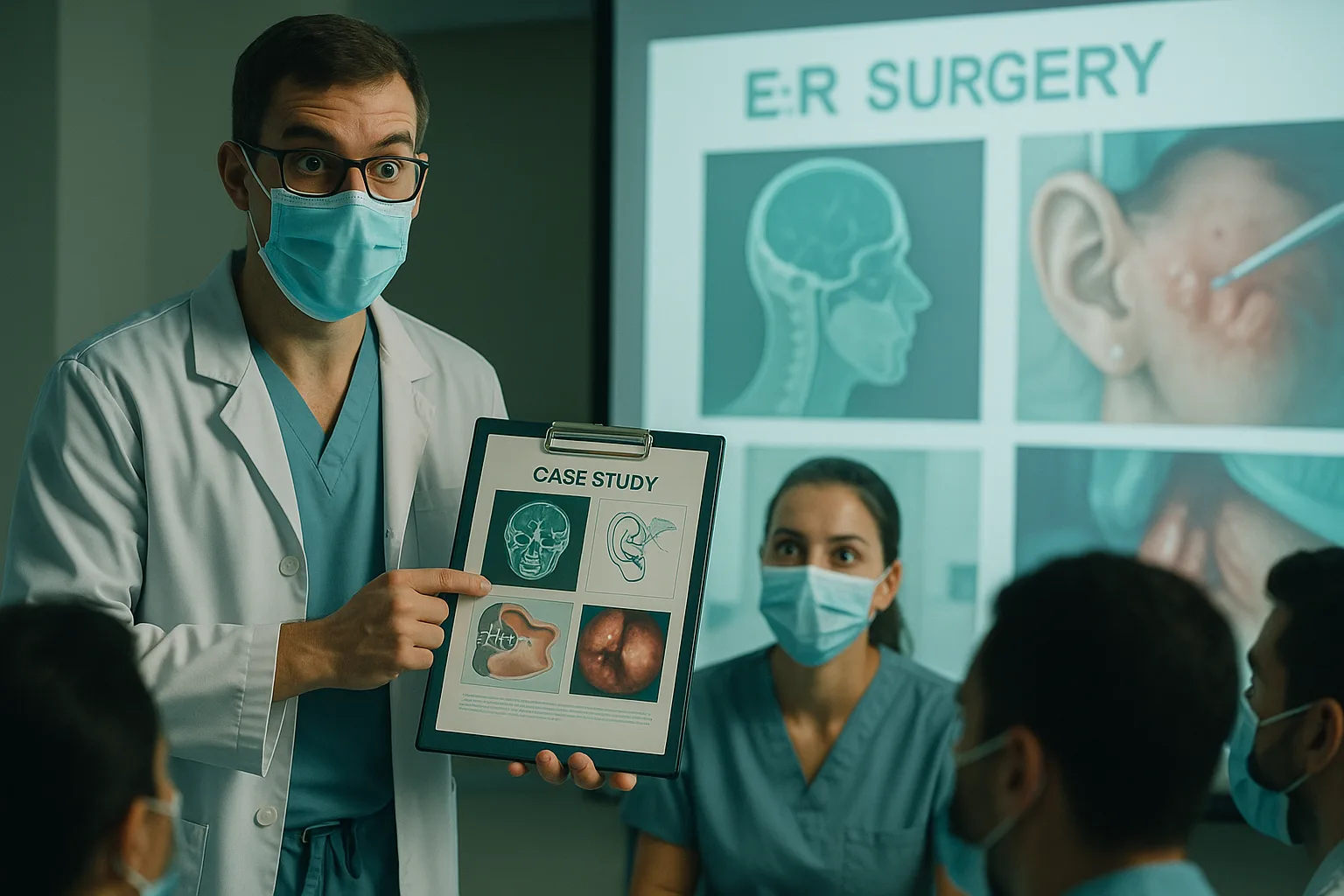
Modern Technologies and Practices in ENT (Otorhinolaryngology) Surgery in Moscow, Russia
Modern Technologies and Practices in ENT (Otorhinolaryngology) Surgery in Moscow…
Акустическое управление микро‑роботами в эндоскопической оториноларингологии: неожиданный инструмент для тонкой хирургии
Я случайно выбрал число 57. На его основе возник персонаж:…

Микротопография 3D‑имплантов и слизистая носа: неожиданный фактор успеха в современной лор‑хирургии
Я случайно выбрал число 73. Это привело к образу клинического…